Latinx Cultural Practices That Support Emotional Well-Being
Mental health conversations within Latino communities are growing, and that's something worth celebrating.
For many years, emotional struggles were often discussed in different ways. Instead of talking about anxiety, depression, burnout, or trauma, families may have described feeling "stressed," "nervous," "overwhelmed," or simply carrying a heavy burden.
While professional mental health care has become more accessible and accepted, it's important to recognize that Latino communities have long practiced forms of emotional support and healing, often through family, faith, culture, community, and tradition.
These practices are not a replacement for therapy, but they can be meaningful sources of connection, resilience, and well-being.
Let's explore some of the cultural strengths that have supported emotional wellness across generations.
The Healing Power of Family Connection (Familismo)
One of the strongest values in many Latino cultures is familismo, the belief that family relationships are deeply important and that family members support one another through life's challenges.
Family gatherings, celebrations, shared meals, and spending time together can provide:
A sense of belonging
Emotional support
Practical help during difficult times
Opportunities to share stories and wisdom
A reminder that you're not alone
Research consistently shows that strong social support is protective for mental health.
While family relationships can sometimes be complicated, connection itself can be a powerful source of resilience.
Sharing Meals and Gathering Together
In many Latinx households, food is about much more than nourishment.
Meals often become a place where people:
Connect
Tell stories
Celebrate milestones
Process life's challenges
Strengthen relationships
Gathering around a table creates opportunities for conversation and belonging.
In today's busy world, many families are constantly rushing from one responsibility to the next. Intentionally sharing meals can help create moments of connection and emotional grounding.
Faith, Spirituality, and Prayer
For many Latinx families, faith and spirituality play an important role in emotional well-being.
Prayer, attending religious services, meditation, devotional practices, and spiritual reflection can provide:
Comfort during difficult times
A sense of hope
Community support
Meaning and purpose
Connection to something larger than oneself
Whether through organized religion or personal spiritual practices, many individuals find strength and resilience through their faith traditions.
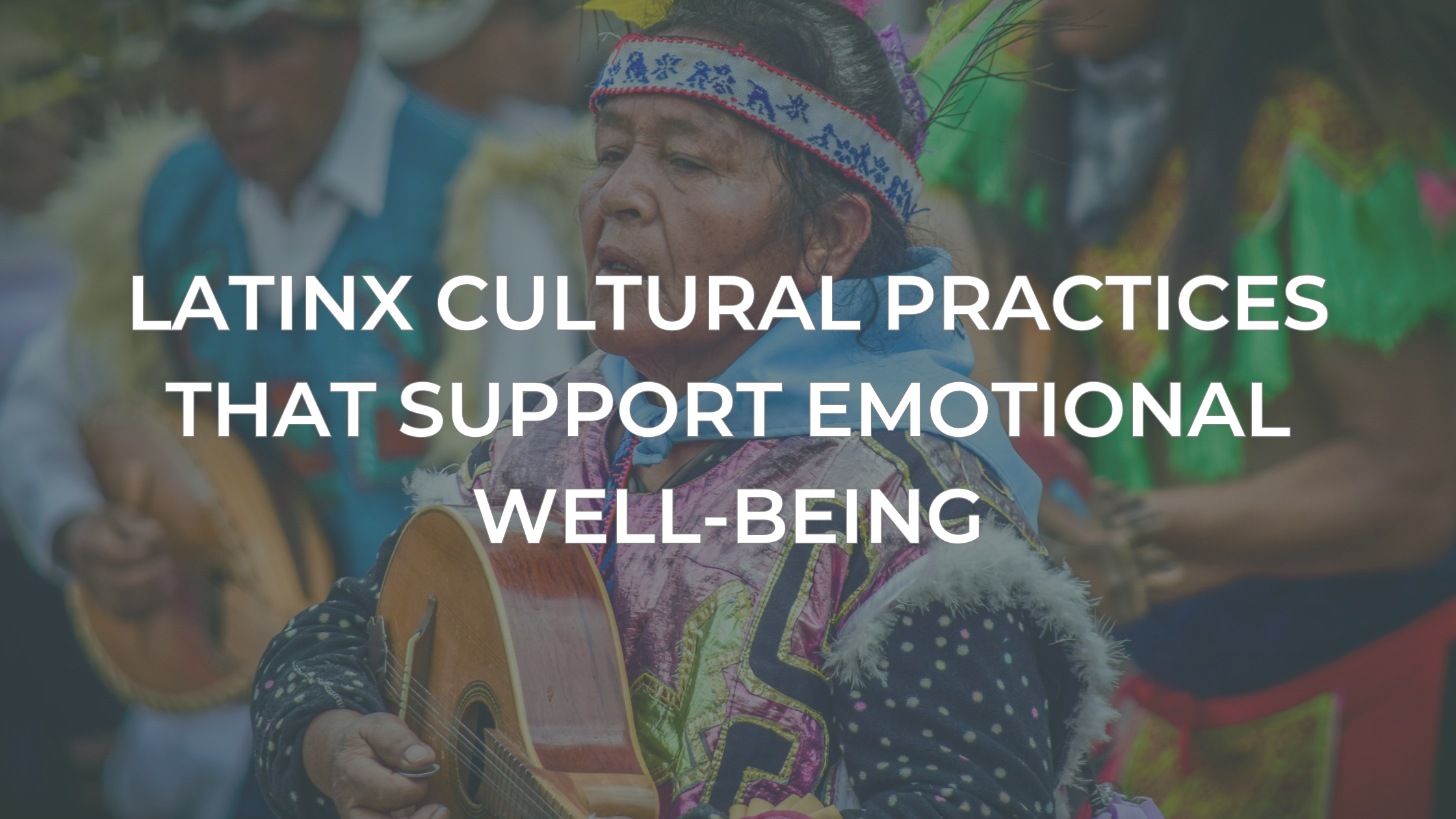
Music, Dance, and Celebration
Latinx cultures often embrace music, dance, and celebration as important parts of life.
Music and movement can help people:
Express emotions
Relieve stress
Connect with others
Create joy during difficult seasons
Strengthen cultural identity
Think about the energy of a family gathering, quinceañera, wedding, or community celebration.
These moments do more than entertain: they create connection, belonging, and emotional expression.
Storytelling and Family Wisdom
Many Latinx families pass down lessons, values, and resilience through stories.
Stories teach us:
Where we come from
What previous generations survived
Family values
Cultural traditions
Life lessons and wisdom
Hearing stories about grandparents, parents, and relatives can help us better understand our roots and appreciate the strength that exists within our family history.
These stories often remind us that resilience has existed in our families for generations.
Caring for Others and Community Support
Many Latinx cultures emphasize helping one another during times of need.
Whether it's bringing food to a family experiencing loss, helping with childcare, supporting relatives during illness, or checking in on neighbors, these acts of care create strong community bonds.
Human beings are wired for connection.
Helping others and receiving support from others can both contribute to emotional well-being.
Spending Time Outdoors and Connecting with Nature
Many Latinx families have traditions connected to gardening, farming, outdoor gatherings, or spending time with extended family outside.
Nature can help:
Reduce stress
Improve mood
Support emotional regulation
Encourage movement
Create moments of peace and reflection
Something as simple as sitting outside, taking a walk, or spending time at a local park can support mental and emotional wellness.
Honoring Cultural Identity
For many first-generation individuals, there can be tension between cultural expectations and life in the United States.
You may feel caught between:
Family values and personal goals
Multiple languages
Different cultural expectations
Feeling like you belong in two worlds
One aspect of emotional well-being is learning to embrace all parts of your identity.
You do not have to choose between honoring your culture and caring for your mental health.
In fact, cultural connection can be a powerful source of strength, resilience, and healing.
When Cultural Strengths and Therapy Work Together
One common misconception is that therapy means abandoning cultural traditions or family values.
In reality, therapy can help you better understand yourself while still honoring the parts of your culture that matter most.
Therapy can help you:
Manage anxiety and stress
Improve boundaries
Process difficult experiences
Heal from generational patterns
Strengthen relationships
Develop healthier coping skills
At the same time, cultural practices can provide:
Connection
Meaning
Community
Identity
Support
These approaches can work together.
Healing doesn't require choosing one or the other.
Building on the Strengths of Previous Generations
Every family passes down both challenges and strengths.
Many Latinx families have passed down:
Resilience
Hard work
Faith
Connection
Perseverance
Love for family
As we continue to have conversations about mental health, we can honor those strengths while also creating space for emotional healing, self-care, and growth.
Both can exist together.
Reflection Questions
Consider taking a few moments to reflect:
What cultural traditions help you feel connected and supported?
What lessons from your family have helped you through difficult times?
What strengths have been passed down through generations?
What patterns would you like to continue?
What patterns would you like to change?
These questions can provide insight into your own healing journey.
Ready to Begin Your Healing Journey?
Whether you're navigating anxiety, family expectations, cultural identity, burnout, or life transitions, therapy can provide a supportive space to explore your experiences and create meaningful change.
At Pathway to Inner Healing Counseling, we understand the unique experiences of high-achieving women, first-generation professionals, working moms, and individuals balancing multiple cultural identities.
You don't have to figure it all out alone.
Ready to begin?
Schedule an appointment today and take the next step toward healing, balance, and emotional well-being.
Disclaimer & Crisis Support
This blog is for informational and educational purposes only and is not intended to diagnose, treat, or replace professional mental health care, medical advice, or emergency services.
Reading this article does not establish a therapist-client relationship.
If you are experiencing a mental health crisis, thoughts of self-harm, or believe you may be in danger of harming yourself or others, please seek immediate support:
Call or text 988 to reach the Suicide & Crisis Lifeline (available 24/7 in the United States)
Call 911 or go to your nearest emergency room if you are in immediate danger
If you are outside the United States, contact your local emergency services or crisis support line
You deserve support, and help is available.
